Showing posts with label Spacecraft. Show all posts

VSS Unity: The World's First Commercial Spacecraft

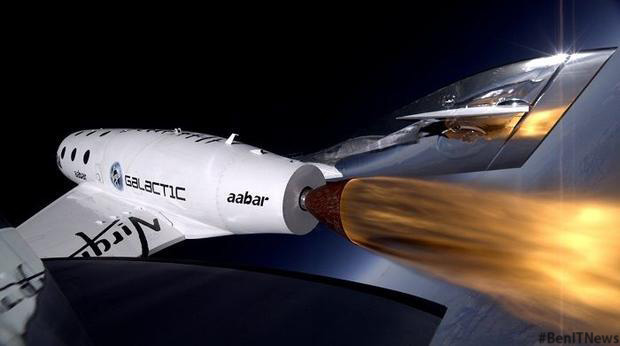
       The new VSS (Virgin Space Ship) Unity was unveiled by Richard Branson’s Virgin Galactic this month at the Mojave Air & Space Port in California. Named by the legendary physicist Stephen Hawking, the spaceship will be the first commercial spacecraft for space tourism.
       The launch of VSS Unity “SpaceShipTwo” marks a turning point for Virgin Galactic, which faced heavy criticism after the loss of their first version of SpaceShipTwo in 2014 which crashed over the Mojave Desert during a test flight.
       After more than three years of construction, the company said it has made many updates to the craft; the most important being the feather inhibitor (a critical component of its re-entry system). It is a replacement for the one that crashed in 2014, killing a test pilot.
       VSS Unity is equipped to carry 2 pilots and 6 passengers into space in a suborbital trajectory, giving the passengers several minutes of zero gravity. More than 700 people have signed up to fly on Virgin Galactic even though the company requires $250,000 up front for a seat.
       In order to return to Earth, SpaceShipTwo employs a unique “feathering” system. By rotating its wings, the spacecraft can increase drag it experiences and slow its descent back to the ground; the design is based on its predecessor SpaceShipOne.
       Just like SpaceShipOne which was released at a high altitude by a plane “WhiteKnightOne” and completed the rest of the trip into space, SpaceShipTwo will be carried by Virgin’s twin-fuselage airplane “WhiteKnightTwo” to an altitude of 45,000 feet which will then separates from plane and ignites its rocket motor to complete the rest of the voyage.
       Virgin Galactic's system is entirely dependent on the skill of its pilots. "The pilots are controlling what the vehicle does at any stage," Mackay said. "It's all dependent on the pilot." He said this strategy was pursed by the company for simplicity: "The responsibility is high. But the reason that we've done it in the first place is to keep everything as simple as possible. The rationale is if you have a simple system, it's less likely to fail, and is therefore inherently safer."
       Now that the spaceship is ready to be tested as a complete vehicle, the team will start integrated ground vehicle testing followed by flight tests in Mojave and ground and air exercises at its future home in Spaceport America, New Mexico.

NASA Seeks Satellite Maker for Series of CubeSat Technology Missions


       In a unique invitation to develop a new satellite platform, NASA’s Small Spacecraft Technology Program (SSTP) is requesting proposals from industry to provide small spacecraft for its Pathfinder Technology Demonstrator (PTD) missions that will include government-furnished technology payloads for a series of flight demonstrations.

       NASA plans to award a contract for a six-unit (6U) CubeSat, with options for up to four additional CubeSats of the same basic design. The Pathfinder technology demonstration missions, enabled by this procurement, are expected to demonstrate several new propulsion systems, advanced control systems for precision pointing, and communications systems that will greatly increase data transmission for future missions.

       “NASA wants to promote the development of the commercial small spacecraft industry,” said Andrew Petro, program executive for SSTP at NASA Headquarters in Washington.  “We are seeking a spacecraft bus that will meet our needs while avoiding over-specification so that the vendor can propose a spacecraft that might also meet the needs of a broader market.”

       A 6U CubeSat measures 4 inches by 8 inches by 12 inches and has a mass of approximately 25 pounds. This Pathfinder CubeSat bus is required to provide at least 45 watts of power and allocate at least one-third of its volume for the technology payload. The proposed satellite is expected to be based on mature subsystems and require little, or preferably no new development, allowing for low cost, rapid delivery, and reasonably low technical risk.

       NASA’s Ames Research Center in California’s Silicon Valley will lead the project in collaboration with NASA’s Glenn Research Center in Cleveland, Ohio.  NASA expects the spacecraft and technology vendors to be partners in the mission operations.

       “The team is excited to solicit proposals for a basic small satellite bus design that will be adaptable for use on a series of low-cost missions for NASA, and possibly for other customers,” said John Marmie, project manager at Ames. “The satellites will be used to demonstrate and characterize novel small satellite payloads in low-Earth orbit.”

       This procurement is a departure from the approach in which NASA and others typically develop a new satellite platform for each technology demonstration or science mission. The procurement of multiple Pathfinder CubeSats will potentially enable a rapid cadence of technology demonstrations to advance the capabilities for CubeSats and other small spacecraft to support a wide variety of science, exploration and commercial space missions.

       “This is a new opportunity for the private sector to participate with NASA in demonstrating some of the technologies recently selected in our Tipping Point solicitation as well as some technologies coming out of the Small Business Innovation Research program" said Steve Jurczyk, associate administrator for the Space Technology Mission Directorate at NASA Headquarters in Washington.

       Ames issued the request for proposals and manages SSTP within NASA’s Space Technology Mission Directorate. Proposals are due by March 30, 2016 and an award is anticipated by June 2016. The request for proposals can be found online at: https://www.fbo.gov/spg/NASA/ARC/OPDC20220/NNA16574335R/listing.html
 
       For more information about the Small Spacecraft Technology Program, visit:
-end-
Kimberly Williams
kimberly.k.williams@nasa.gov
Ames Research Center
650-604-2457
 
       This post was originally published at NASA.gov

Launch of Supersonic Vehicle Test


       Reporters are invited to a media day Monday, June 1, at the U.S. Navy's Pacific Missile Range Facility (PMRF) on Kauai, Hawaii, to learn about NASA's second flight test of its Low-Density Supersonic Decelerator (LDSD).
       NASA's LDSD project is designed to investigate and test breakthrough technologies for landing future robotic and human Mars missions, and safely returning large payloads to Earth. The test, performed over the Pacific Ocean, will simulate the supersonic entry and descent speeds at which the spacecraft would be traveling through the Martian atmosphere.

       The media day will begin with a mission overview briefing at 8 a.m. HST. Briefing participants will include:

⦁    U.S. Navy Capt. Bruce Hay, commanding officer, PMRF
⦁    Steve Jurczyk, associate administrator of the Space Technology Mission Directorate at NASA Headquarters in Washington
⦁    Mark Adler, LDSD project manager at NASA's Jet Propulsion Laboratory (JPL) in Pasadena, California
⦁    Ian Clark, LDSD principal investigator at JPL
       The briefing will be broadcast live at:
and
       To participate by phone, media must contact Kim Newton at 256-544-0371, 256-653-5173 or kimberly.d.newton@nasa.gov. Briefing participants also will answer questions submitted to the Ustream chat box or via Twitter using the #askNASA hashtag. After the briefing, media at PMRF will be taken on a tour of the launch area and Range Operations Center, as well as a driving tour of the facility.
       The test launch window is from June 2-12, and extends each day from approximately 8:30 to 9:30 a.m.
       Media are invited to watch the launch live at PMRF and, once the vehicle is no longer in unaided view, continue watching the test on monitors in the LDSD media center. Reporters must arrive no later than 5:45 a.m. each launch-attempt day for escort onto the base.
       At launch time, a giant balloon will carry the test vehicle to an altitude of 120,000 feet (37,000 meters). After released from the balloon, a booster rocket will lift the disk-shaped vehicle to 180,000 feet (55,000 meters), during which it will accelerate to supersonic speeds.
       Traveling at about three times the speed of sound, the vehicle’s inner-tube-shaped decelerator, called a supersonic inflatable aerodynamic decelerator, will inflate and slow the vehicle. Then, at Mach 2.35, its parachute will inflate and gently carry the vehicle to the ocean's surface.
       NASA's LDSD test vehicle carries several onboard cameras. Selected portions of the test, including the rocket-powered ascent, will be broadcast live on Ustream and NASA TV.
       The decision to attempt launch of the LDSD test will be made the day before each launch opportunity. NASA will issue updates on Twitter at @NASA and @NASA_Technology. Updates and other information on the mission can also be found at:
       Media who would like to attend media day or launch day activities at PMRF must register in advance by contacting Elena Mejia at 818-354-5011 or elena.mejia@jpl.nasa.gov.
       Foreign media must register by Thursday, May 14. U.S. media must register by Thursday, May 21. Media who are unsure whether they will attend are encouraged to register by the deadlines, even if they later cancel. NASA will provide detailed instructions to registrants.
       The first LDSD flight test in June 2014 verified the sound design of the vehicle design and test approach, and provided the project team an early look at how two deceleration technologies would function when traveling at supersonic speeds. During this first test, the SIAD operated successfully but the parachute did not inflate. One of the main goals this time around is to test the redesigned parachute.
       NASA's LDSD program is part of the agency's Space Technology Mission Directorate, which innovates, develops, tests and flies hardware for NASA's future missions. For more information about NASA's investment in space technology, visit:
-end-
Josh Buck
Headquarters, Washington
202-358-1130
jbuck@nasa.gov
Kim Newton
Marshall Space Flight Center, Huntsville, Ala.
256-544-0371
kimberly.d.newton@nasa.gov
D.C. Agle
Jet Propulsion Laboratory, Pasadena, Calif.
818-393-9011
david.c.agle@jpl.nasa.gov
Stefan Alford
Pacific Missile Range Facility, Kauai, Hawaii
808-335-4740
stefan.alford@navy.mil

       This post was originally published at NASA.gov